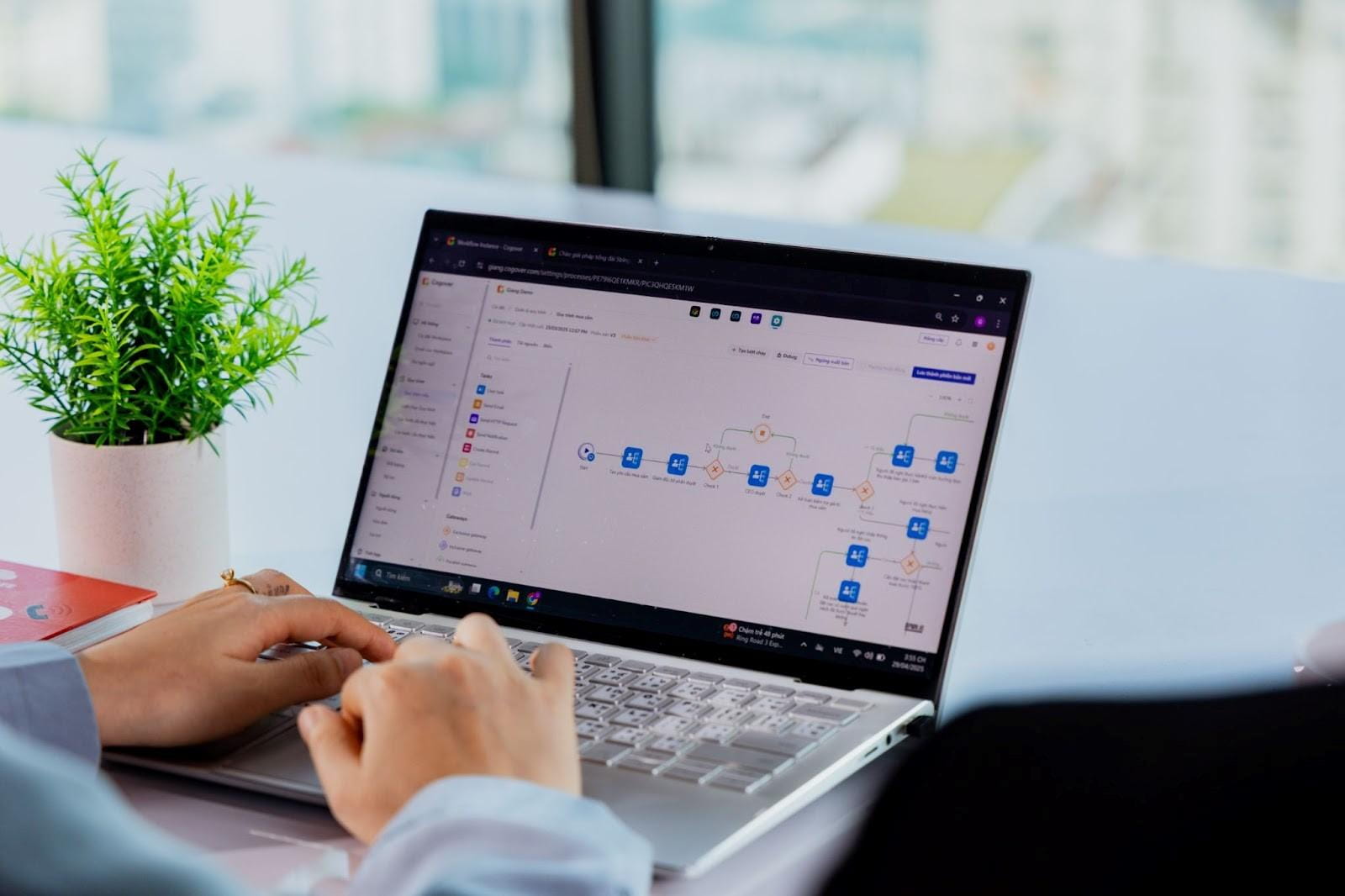
Process automation,
process to platform.
RPA, workflow orchestration, intelligent document processing and agentic augmentation, engineered as software, with the reliability the business actually depends on.
Automation only earns its place when it removes work rather than reshaping it. Most engagements begin with a shorter target list than the one we started with, and that is exactly the point.
Discovery
Process mining and honest triage. Not every process should be automated, that decision matters.
Volume, variance, stability and value tell us where automation pays back. Unstable, low-volume or judgement-heavy processes are usually the wrong candidates, automating them moves the pain rather than removing it.
The first useful artefact of most engagements is a shorter target list than the one we started with.
The boring 80% stays boring and reliable. Reasoning is reserved for the 20% that genuinely needs it.
Design
APIs over UI. Deterministic flow over prompts. Reusable components before the first bot ships.
We prefer APIs and events over UI whenever the system allows, orchestration engines over point automations, and reusable components over per-bot bespoke builds. Standards land before scale, not after.
Where UI is unavoidable, we invest in resilient selectors and structured exception handling.
Deliver
Version control, environments, tests and CI. Automations ship with monitoring, runbooks and rollback, like any production system.
Bots and workflows are software artefacts. Credentials in vaults, least-privilege access, audit trails, staged rollouts, all engineered from day one.
AI and IDP get pulled in where they change the outcome, with evals, guardrails and human review calibrated to risk.
Operate
Portfolio economics measured monthly. Automations that stop paying back get retired, not preserved.
Live portfolio view of every automation's value, cost and reliability. Runbooks, on-call, incident triage, treated as ongoing engineering.
The economics of a 200-bot estate are made or broken here.
Toolkit
Framework, platform and vendor selection is driven by the shape of the work and the team who'll own it, not by whichever ecosystem is loudest this year. The list below is representative, not prescriptive.
- Orchestration
- Camunda · Temporal · Airflow
- RPA
- UiPath · Automation Anywhere · Power Automate · Blue Prism
- IDP
- ABBYY · AWS Textract · Azure Doc Intel · Rossum
- iPaaS
- Boomi · MuleSoft · Workato · n8n
- AI
- Anthropic · OpenAI · LangChain
Selected work
What clients ask us first
01How do you decide what to automate, and what not to?
By working from the process, not the tool. Volume, variance, stability and value tell us where automation pays back. Unstable, low-volume or judgement-heavy processes are usually the wrong candidates.
02RPA, orchestration or agents, how do you choose?
Per process. Orchestration wins for long-running workflows with human tasks. RPA earns its place where systems refuse to expose APIs. Agents get pulled in where planning and adaptation are genuinely needed. Blends are healthy.
03How do you keep bots from breaking?
By preferring APIs over UI, writing against contracts rather than screens, keeping bots small and composable, and monitoring them as production systems with owners and runbooks. Brittleness is usually a design choice.
04How do you run a healthy programme at scale?
A centre-of-excellence with intake, prioritisation, reusable components, standards, environments, security and observability. Live portfolio value tracking. Retirement of automations that stop paying back.

Let's discuss your automation programme.
Share a brief overview of the processes you're trying to remove work from, we'll arrange an introductory conversation with the relevant practice leadership.