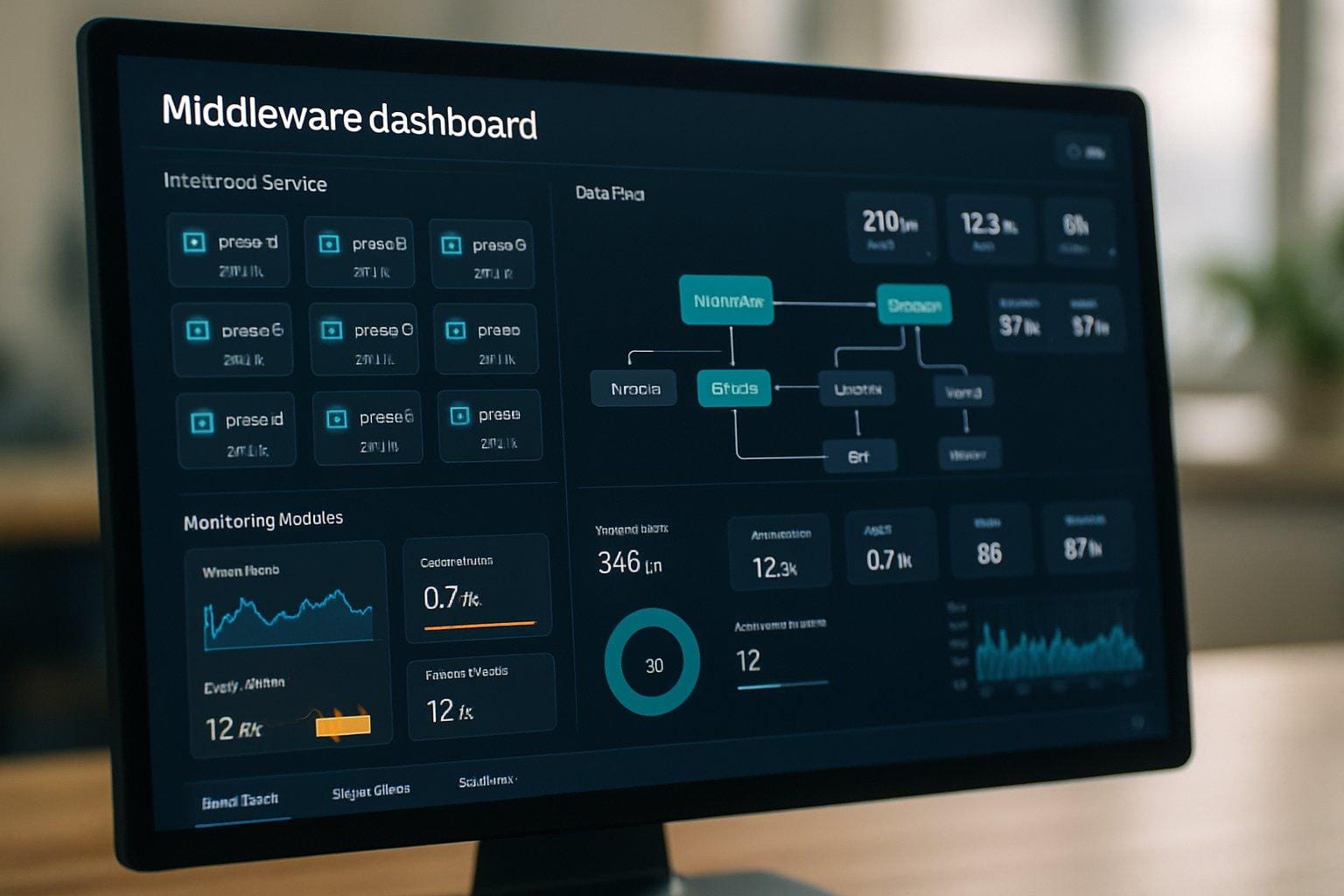
IoT,
from sensor to system.
Devices, firmware, connectivity, edge, cloud, analytics and operations, engineered end to end for the physics of the field, not just the demo on the desk.
A complete IoT practice, engineered end to end.
From firmware and connectivity through edge, cloud, analytics, digital twins and operations, our practice covers the full delivery surface of enterprise IoT.
IoT strategy & solution design
Use-case shaping, unit economics, connectivity choice and end-to-end architecture, grounded in the physics of the environment and the lifetime cost of the fleet, not just the pilot.
Firmware & embedded software
Bare-metal, RTOS and Linux firmware, with secure boot, OTA, power budgets and long-term maintainability treated as first-class design constraints.
Hardware selection & prototyping
Reference-design selection, sensor and MCU/SoC choice, prototype builds and design-for-manufacture support, so the product that ships isn't a lab bench with a case around it.
Connectivity & protocols
Cellular (LTE-M, NB-IoT, 5G), LPWAN (LoRaWAN), Wi-Fi, BLE and satellite, chosen against the coverage, power and cost profile the deployment actually needs.
Edge computing & edge AI
Edge gateways, on-device inference and stream processing, so latency, bandwidth and privacy-sensitive workloads happen close to the sensor, not at the cost of a round-trip.
IoT platforms & cloud backends
AWS IoT, Azure IoT and GCP IoT patterns, device registries, twins, command channels and telemetry ingest engineered for the fleet size, not for a diagram.
Telemetry, streaming & analytics
Streaming ingestion, time-series storage, alerting and dashboards on Kafka, Flink, InfluxDB, Timescale and warehouse-native streaming, built on the freshness the operation genuinely needs.
Digital twins & simulation
Digital-twin models that mirror the physical estate, for monitoring, what-if analysis, predictive maintenance and operator training, built against your operational model, not a vendor template.
Device management & OTA
Fleet provisioning, secure OTA, staged rollouts, rollback and observability, designed so a firmware regression doesn't turn into a truck-roll across half the country.
IoT security & compliance
Secure boot, device identity, encryption in transit and at rest, zero-trust device access, and alignment to IEC 62443, ETSI EN 303 645 and sector-specific regimes.
Predictive maintenance & optimisation
Machine-learning models on top of governed telemetry, for anomaly detection, RUL estimation and process optimisation, engineered against the workflows they inform, not delivered as slides.
Enterprise & operations integration
Integration with ERP, EAM, MES, SCADA and field-service systems, so IoT data changes work orders, replenishment and dispatch, not just dashboards.
Prove it in the field. Then scale the fleet.
A delivery model built for the reality of physical estates, real environments, honest economics, and operations engineered from the start.
Frame
Use cases, unit economics, coverage and constraint mapping. The output is a phased plan with a first slice that a business owner will actually field-test.
Prototype
Hardware, firmware, connectivity and cloud stood up as a working slice, deployed against a real environment, not a lab. We size costs and physics before we scale.
Scale
Manufacturing readiness, provisioning, OTA, telemetry and analytics engineered for fleet scale. Rollouts run as staged waves with observability and rollback.
Operate
Device health, telemetry quality, security, cost and business KPIs monitored as ongoing engineering disciplines. Enablement is designed in from day one.
A pragmatic IoT toolchain.
Silicon, connectivity, platform and framework selection is driven by unit economics and coverage, not by whichever reference architecture a vendor pushed this quarter.
 AWS IoT
 Azure IoT
 GCP IoTBBalena
 KafkaFFlinkIInfluxDBTTimescaleDB
 GrafanaTLTensorFlow Lite
 PyTorchOOpenTelemetry
 Kubernetes
 Terraform
 Prometheus
Programmes delivered on this practice.



What prospective clients ask us first.
If your question isn't addressed here, please reach us at hello@tekansa.com.
01How do you choose the right connectivity, cellular, LoRaWAN, Wi-Fi or satellite?
It's a working decision driven by coverage, power, bandwidth, latency and unit economics, not by preference. Fixed indoor assets often only need Wi-Fi or Ethernet. Distributed low-bandwidth sensors on batteries lean toward LPWAN. Mobile assets in metro areas fit cellular categories like LTE-M or NB-IoT. Truly remote or maritime deployments justify satellite. Most real fleets end up with a small set of connectivity classes rather than one, we design for that from the start.
02How much should live at the edge versus in the cloud?
As much as the workload genuinely needs, no more. Latency-sensitive control, privacy-sensitive processing and bandwidth-heavy pre-processing belong at the edge. Long-horizon analytics, cross-fleet models and business-system integration belong in the cloud. We design the split explicitly against latency, bandwidth cost and failure-mode budgets, and make the seam between them observable, so we can move workloads in either direction as reality changes.
03How do you keep an IoT fleet secure over years in the field?
By treating device identity, secure boot, signed OTA and encrypted transport as first-class from day one, never retrofitted. Devices carry unique cryptographic identities; firmware is signed and verified on boot; OTA is staged with rollback; access is zero-trust; and the security posture is designed against IEC 62443, ETSI EN 303 645 and sector-specific frameworks. We also design for revocation and rotation, because 'the device that never phones home again' is a real deployment class.
04How do you approach OTA, versioning and rollback across large fleets?
OTA is staged in explicit waves, pilot, canary, region, full, with health checks, telemetry and rollback conditions defined per wave. Devices carry redundant firmware slots so a bad flash falls back automatically. Version and configuration are treated like code: reviewed, versioned, observed. This is usually the difference between an IoT programme that ages gracefully and one that ossifies around whatever shipped in year one.
05Where does AI fit into your IoT practice?
In three places. Edge inference for latency-sensitive detection and control on-device. Fleet-level ML for anomaly detection, predictive maintenance and process optimisation. And, increasingly, agent-augmented operator assistants layered on top of the telemetry estate. In every case the value is bounded by the data quality beneath, which is why we invest heavily in ingest, contracts and governance before layering AI on top.
06How do you plan for the total cost of ownership of a fleet, not just the pilot?
By modelling the full lifecycle from day one, hardware BOM, connectivity, cloud, provisioning, OTA, support, replacements and end-of-life. Pilots that look cheap often hide a truck-roll problem or a licence tail that turns up in year three. We build the economic model alongside the technical one, keep it live through delivery, and design against it, so the fleet is defensible to finance not just at launch, but every year after.

Let's discuss your IoT programme.
Share a brief overview of the fleet you're building or scaling, we'll arrange an introductory conversation with the relevant practice leadership. Every enquiry receives a direct response.