Legacy modernised,
in reversible waves.
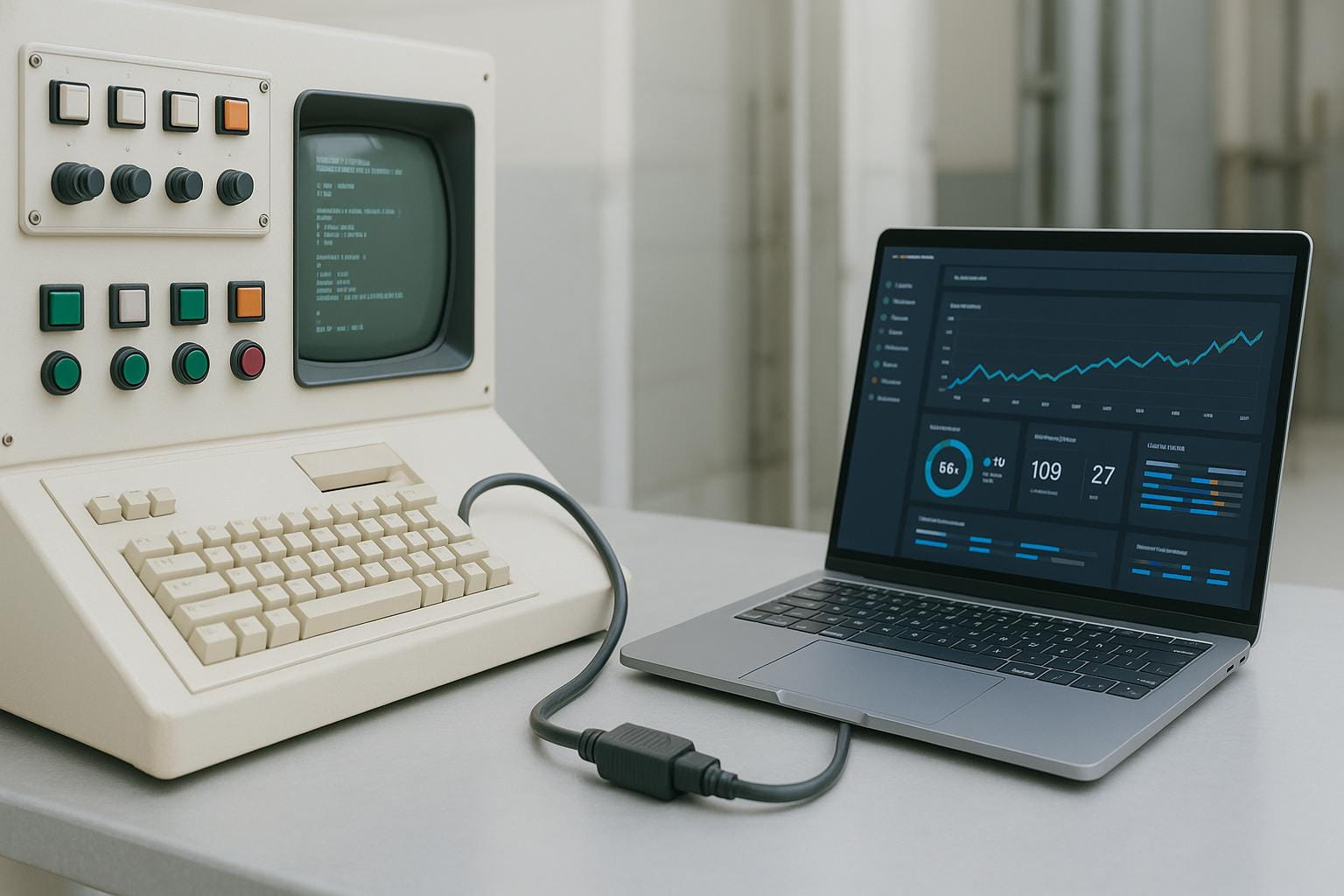
Applications, databases, mainframe estates and hand-rolled ETL modernised as rolling waves with parallel-run and reconciliation, designed so cutovers are reversible and rollback is a same-day option.
Modernisation is not a technology project. It is a decade of accumulated business logic being carefully unpicked from decades of accidental technology. Waves work. Big bangs don't.
Disposition
Per workload, retire, retain, replatform, refactor or rebuild. Evidence, not opinions.
Usage, dependencies, run-cost and business value inform every disposition. Some systems are retired without replacement'no users, no criticality' is a valid answer and usually overlooked.
The output is a workload-level map with phased plan, not a strategy slide.
Legacy retires only after the replacement has earned trust in production. Not before.
Design & wrap
Where a legacy system stays, we surround it with modern APIs and contracts, as a foundation for later replacement, not as the end state.
Modern APIs, event streams and typed contracts wrap the legacy surface. Consumers move to the modern seam; the legacy interior becomes replaceable one slice at a time.
This is the strangler pattern done seriously, not as a slogan.
Migrate
Rolling waves with parallel-run, reconciliation and same-day rollback. Nothing rides on a single big-bang weekend.
We stand up the target, dual-run against the source, reconcile outputs metric-by-metric or transaction-by-transaction, and cut consumers over in scoped batches with a rollback path ready.
Zero-downtime patterns are engineered, not hoped for.
Retire & optimise
Legacy retires only after the replacement earns trust. Post-migration optimisation is the last, non-optional step of every wave.
Right-sizing, licence rationalisation and hardening land in the weeks after each wave, because the migration is only economically justified once the run-cost drops.
Retirement is a milestone, not a cleanup task.
Toolkit
Framework, platform and vendor selection is driven by the shape of the work and the team who'll own it, not by whichever ecosystem is loudest this year. The list below is representative, not prescriptive.
- Cloud
- AWS · Azure · GCP · Kubernetes · Terraform
- Migration tools
- AWS MGN · Azure Migrate · Debezium · GoldenGate
- Databases
- Postgres · Aurora · SQL Server · Oracle
- Data
- Snowflake · Databricks · dbt · Airflow
- Integration
- Kafka · MuleSoft · Boomi
Selected work
What clients ask us first
01Retire, retain, replatform, refactor or rebuild, how do you choose?
Per workload, on evidence. Retire what nobody uses. Replatform where code is fine but the platform is expensive or unsupported. Refactor where design debt is the blocker. Rebuild where business logic itself has drifted from what the code does.
02How do you migrate without a bad cutover?
Rolling waves with parallel-run, reconciliation on identity and value, and same-day rollback. Legacy retires only after the replacement earns trust in production, usually weeks after cutover, not the morning after.
03How do you handle mainframe or AS/400 modernisation?
Without heroics or ideology. Some workloads surround with APIs and stay; others extract feature by feature; a small number rebuild where business logic has drifted. We prefer strangler patterns over 'lift-and-shift-then-rewrite' fantasies.
04How do you keep the migration paid for?
Post-migration optimisation designed in from day one. Right-sizing, licence rationalisation, storage tiering and workload placement run in the weeks after each wave. FinOps is the last, non-optional step.

Let's discuss your modernisation programme.
Share a brief overview of what you're moving and off what, we'll arrange an introductory conversation with the relevant practice leadership.