APIs,
shipped as product.
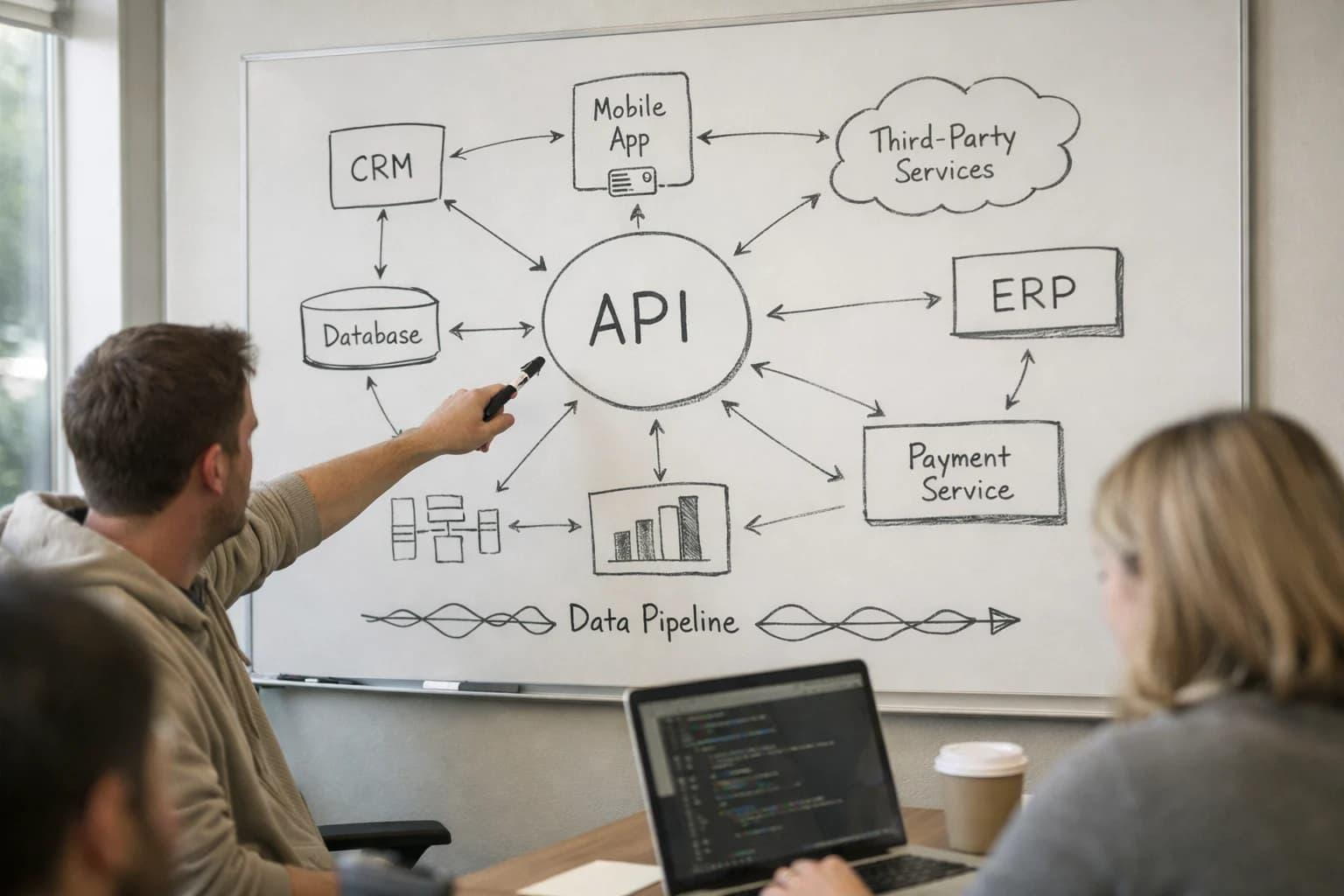
REST, GraphQL, gRPC and event-driven APIs engineered as first-class product surfaces, with contracts, versioning, security, developer experience and observability designed to survive change.
An API estate is a product with many customers you didn't sign a contract with. The estates that age gracefully are the ones designed with that seriousness from day one.
Design
Contracts, examples and versioning treated as first-class, so consumers integrate without reverse-engineering.
REST, GraphQL, gRPC or events, chosen per surface. OpenAPI and AsyncAPI as versioned artefacts. Domain-driven decomposition where it earns its keep.
The design decisions are made with real consumers in the room.
The API estate that ages gracefully is the one designed as a product, not the one accumulated as a side-effect of other work.
Security & gateway
OAuth2/OIDC, mTLS, scopes and rate limits engineered against real threat models, not against OWASP as a checklist.
Kong, Apigee, AWS API Gateway or Azure APIM, chosen for the traffic pattern. Gateway concerns live in the gateway, business logic lives in services.
Public APIs get red-teamed. Nothing goes live without a threat model matched to blast radius.
Developer experience
Portals, docs, sandboxes, SDKs and versioning designed so an integrator ships to production without needing an implementation manager.
The measurable outcome: an integrator lands their first successful call without calling us. DX is engineering, not documentation homework.
Most API estates fail on DX rather than on capability. We invest accordingly.
Operate
Traces, per-consumer analytics, deprecation and continuous improvement, treated as engineering.
Knowing which consumer hits which endpoint at what rate is what turns an API estate into a real product surface. It's also what makes deprecation possible.
Versioning and deprecation are managed policies, not events.
Toolkit
Framework, platform and vendor selection is driven by the shape of the work and the team who'll own it, not by whichever ecosystem is loudest this year. The list below is representative, not prescriptive.
- Style
- REST · GraphQL · gRPC · OpenAPI · AsyncAPI
- Gateway
- Kong · Apigee · AWS API Gateway · Azure APIM
- Events
- Kafka · Kinesis · EventBridge · NATS
- Auth
- Auth0 · Okta · OIDC
- DX
- Postman · Stoplight · Redoc
Selected work
What clients ask us first
01REST, GraphQL or gRPC?
Per surface, on evidence. REST for broad reach. GraphQL for rich domain back-ends. gRPC for latency-sensitive service-to-service. Most real estates use two or three.
02How do you handle versioning?
Non-breaking additions are safe. Breaking changes require a new version with deprecation window and monitoring on the old. Schema evolution beats URL version proliferation.
03How do you make DX actually work?
Portals with searchable docs, sandboxes with realistic data, SDKs where they earn it, sample apps, clear versioning. Measurable outcome: first successful call without a call to us.
04How do you handle security?
OAuth2/OIDC or mTLS. Scopes. Rate limits. Schema validation. DLP. Threat model per API. Public APIs get red-teamed.

Let's discuss your API programme.
Share a brief overview of the surfaces and consumers, we'll arrange an introductory conversation with the relevant practice leadership.