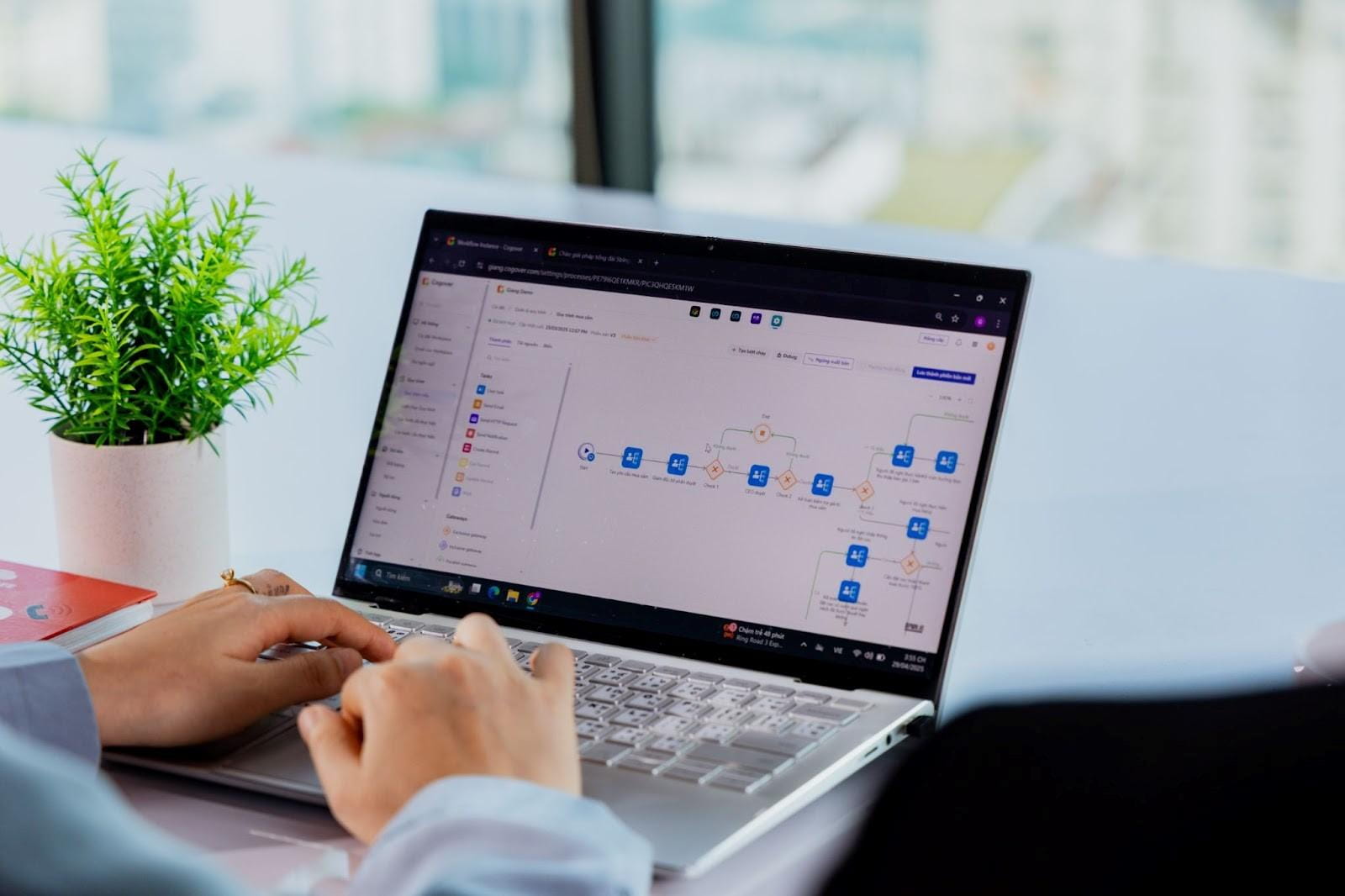
Automation,
engineered to last.
RPA, workflow orchestration, intelligent document processing and agent-augmented automation, engineered as software, with the reliability the business actually depends on.
A complete automation practice, engineered end to end.
From discovery through RPA, orchestration, document intelligence, agent-augmented workflows and CoE operations, our practice covers the full delivery surface of enterprise automation.
Process discovery & assessment
Task and process mining, opportunity ranking and honest triage, so we automate work that actually deserves it, not work that just looked automatable in a workshop.
Robotic process automation
Attended and unattended bots on UiPath, Automation Anywhere, Power Automate and Blue Prism, engineered with version control, environments and CI, not spreadsheet-managed scripts.
Workflow orchestration
Long-running workflows on Camunda, Temporal and Airflow, with human tasks, timers, retries and idempotency modelled explicitly, so automation survives partial failures.
Intelligent document processing
OCR, layout understanding and structured extraction from invoices, contracts, forms and correspondence, with validation, confidence thresholds and human review where they earn their keep.
Agent-augmented automation
Blends of deterministic automation and LLM reasoning, so the boring 80% stays boring and reliable, and reasoning is reserved for the 20% that genuinely needs it.
System & API integration
Automation stitched through APIs, iPaaS and event buses where they exist, and through UIs only where the systems refuse to expose anything else. Never UI-first by default.
Citizen-developer enablement
Guardrails, templates and platforms for citizen automation, so business teams can build safely without generating the shadow-IT estate a governance team eventually has to clean up.
Automation CoE & operating model
Centre-of-excellence design, intake, prioritisation, standards and reusable components, so a portfolio of 200 bots doesn't collapse under its own maintenance cost.
Reliability & observability
Structured logging, monitoring, alerting and SLAs on automation, treated as production systems with owners and runbooks, not as artefacts that quietly fail on Friday night.
Governance, controls & audit
Credential vaults, access scoping, segregation of duties, change control and audit trails, aligned to SOX, ISO 27001, GDPR and sector regimes where they apply.
Automation economics
Value tracking that separates automations that actually pay back from ones that just moved the work, so the portfolio's economics stay defensible to finance rather than aspirational.
RPA modernisation
Rescuing brittle first-generation bot estates, refactoring onto contracts, APIs and orchestration, retiring the ones that shouldn't have been built in the first place.
Automate what deserves it. Retire what doesn't.
A delivery model built for the shape of automation work, honest triage of candidates, deterministic design, and portfolio economics engineered from day one.
Discover
Task and process mining, honest triage of what genuinely warrants automation, and a phased plan with a first slice scoped. Not every process should be automated, that decision matters.
Design
Target design that favours APIs over UI, deterministic flow over prompts, and clear failure paths. Reusable components and standards are shaped before the first bot ships.
Deliver
Iterative delivery with version control, environments, tests and CI. Automations ship with monitoring, runbooks and rollback, the same way any production system ships.
Operate
Reliability, cost, exceptions and business value monitored as ongoing engineering disciplines. Portfolios evolve; automations that stop paying back get retired, not preserved.
A pragmatic automation toolchain.
Platform, orchestration and integration selection is a working decision, driven by your systems and economics, not by category preference.
 AirflowNn8nZZapierMMakeBBoomiMMuleSoft
 KafkaAABBYYRRossum
 AWS Textract
 Azure AI Doc Intel
 Google Doc AI
 Python
 .NET
 Playwright
 Selenium
 KubernetesAWSAzureGCP
Programmes delivered on this practice.


What prospective clients ask us first.
If your question isn't addressed here, please reach us at hello@tekansa.com.
01How do you decide what should be automated, and what shouldn't?
By working from the process, not the tool. Task and process mining tells us where time actually goes; volume, variance, stability and value tell us where automation will pay back. Processes that are unstable, low volume, or fundamentally require human judgement are usually the wrong candidates, automating them typically moves the pain rather than removing it. The first useful artefact of most engagements is a shorter target list than the one we started with.
02RPA, orchestration or agents, how do you choose?
A working decision, per process. RPA earns its place where you have to work through UIs of systems that won't expose APIs. Orchestration engines like Camunda and Temporal are the right answer for long-running workflows with human tasks, timers and idempotency. Agents get pulled in where the workflow genuinely needs planning and adaptation, never as the default. The stack that lasts is usually a blend.
03How do you keep bots from breaking every time a source system changes?
By preferring APIs and events over UI whenever the system exposes them, by writing bots against contracts rather than screens, by keeping bots small and composable, and by monitoring them as production systems with owners and runbooks. When UI automation is unavoidable, we invest in resilient selectors and structured exception handling so failures are diagnosed instead of guessed at. Brittleness in RPA is usually a design choice.
04How do you run a healthy automation programme at scale?
A centre-of-excellence with intake, prioritisation, reusable components, standards, environments, security and observability, not a wiki full of process documents. We keep a live portfolio view of every automation's value, cost and reliability, so the ones that stop paying back get retired instead of tolerated. The economics of a 200-bot estate are made or broken here.
05Where does AI fit into your automation practice?
In two places. First, intelligent document processing, OCR, layout understanding and structured extraction, for the unstructured input real processes carry. Second, LLMs and agents for the small fraction of steps that genuinely need reasoning, wrapped in deterministic flow, guardrails and human review. We're deliberate about scope: adding an LLM to a stable rule-based step usually just makes the step slower, more expensive and less reliable.
06How do you handle security, compliance and audit?
Credentials in vaults, least-privilege access, segregation of duties, change control and full audit trails from day one. Automations are treated as identities with owners, permissions and lifecycle, not as one-off scripts under someone's account. We align to SOX, ISO 27001, GDPR and sector-specific regimes where they apply, and we produce the evidence trail alongside delivery rather than reconstructing it before an audit.

Let's discuss your automation programme.
Share a brief overview of the processes you're trying to automate and we'll arrange an introductory conversation with the relevant practice leadership. Every enquiry receives a direct response.