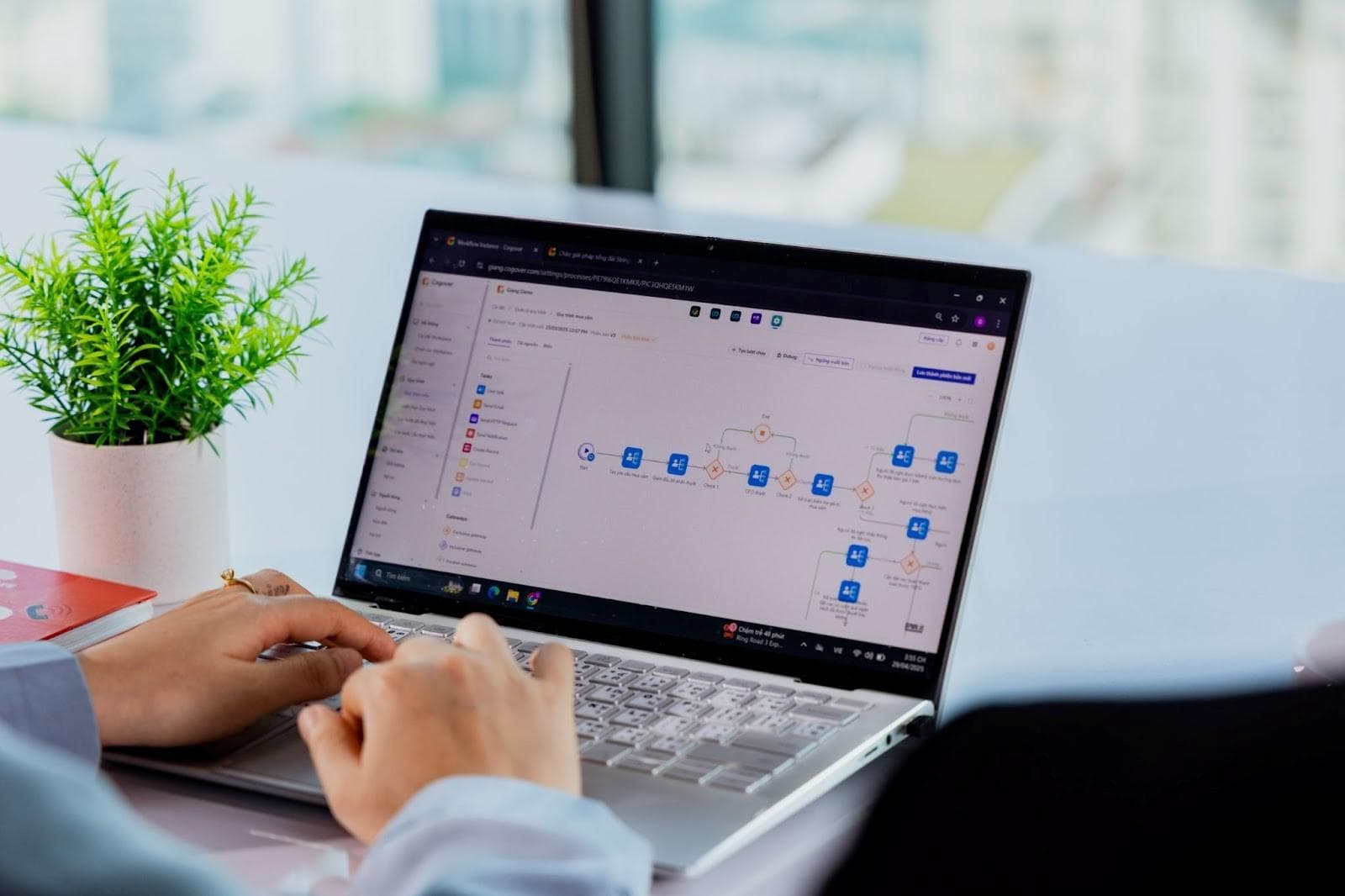
Routing, triage and follow-up on autopilot.
Trigger-based automations for the flows that used to need a person on the phone, with human review, approvals and audit for every step.
- Documentation time reclaimed
- 42%
- After-hours booking uplift
- 3×
- AI actions clinician-signed
- 100%
Where Workflow Automation fits in your healthcare stack.
Most healthcare AI dies in the pilot. Ours doesn't, because we engineer it into the workflow the clinician already trusts, with clinician-in-the-loop by default, an evaluation harness from day one and audit trails on every action.
Ambient documentation, patient assistants, receptionist agents, analytics copilots, workflow automation. All within a safety envelope your compliance team can defend.
Inside this practice, Workflow Automation is engineered against real workflow, with the same clinician-in-the-loop, HIPAA-by-default and same-team-through-go-live standards as every other engagement we run.
What we ship, shipped every time.
A working set of capabilities that arrive as part of the engagement, engineered, tested and documented, not just promised on a slide.
- Trigger & rule engine
- Multi-step orchestrations
- Approval & review gates
- Notifications across channels
- SLA & escalation
- Full audit trail
- Documentation time reclaimed
- 42%
- After-hours booking uplift
- 3×
- AI actions clinician-signed
- 100%
What we build to, and what we build on.
Standards and technology chosen for the workload, never defaulted to whichever we happen to be closest to.
- HIPAA
- HITRUST
- GDPR
- SOC 2
- OpenAI
- Anthropic
- Azure OpenAI
- Bedrock
Four moves. Same rhythm every time.
Same operating model whether the engagement is six weeks or twelve months. Small, disciplined, boring, which is what you want when patient care is at stake.
Clinical discovery
Two to three weeks. We sit with clinicians, ops and IT. Map the real workflow, name the constraints, agree what "shipped" means on the floor.
Shape the work
Fixed scope with weekly billing, or a monthly retainer. Compliance evidence, migration path and success criteria planned into the scope on day one.
Ship in weeks
Weekly production releases, always behind flags. Clinician-in-the-loop on every AI feature. Same team from design through go-live, no handoffs.
Own the runway
Handover is continuous. Your team gets the code, infrastructure, runbooks and audit evidence by delivery. Support is a service, never a lock-in.
The ones we hear most often.
A short answer to each. If yours isn't here, the fastest way to get it answered is to ask us directly.
Ask a questionHow do you keep clinicians in the loop?
Every AI-generated clinical output is a draft. Nothing enters the record without an explicit clinician sign-off. Approvals are captured with the timestamp, the user and the model version, audit-ready by default.
Where does the data go, do you train on our patients?
No. All processing happens within your tenancy against your chosen provider. Patient data is not used to train external models. Prompts, responses and grounding sources are logged for your audit, not ours.
How do you evaluate models before you deploy?
Every AI capability ships with an evaluation harness, task-level metrics, adversarial tests, safety cases and human review. We publish the results into the delivery artefacts, not into a slide.
What if the model gets it wrong?
Guardrails, fallbacks and human-review paths are engineered in. If the model can't produce a safe, grounded response, the workflow escalates to a human. Silent failure is the failure mode we design against.
Related in Healthcare AI.
Bring us the hard part.
A short conversation is usually enough to know if we are the right team. If we are not, we will tell you.